Author: Ana Felices – Words on Art

  • Brewed for the Sun: Inside Walthamstow’s Retro Malt Haus

    Getting to see the sun in London is no easy feat. So when Helios makes an appearance and the temperature rises as much as to dare to get your bare arms out on a Saturday afternoon, Londoners know what to do: go to a terrace, meet up with some friends, have a cold brew, and get as much vitamin D as possible, before the clouds come back and the skins asks for the coats back.

    And so yesterday, when I managed for the first time to leave the house without the constant fear of not carrying enough additional layers to cover up in the (very likely) event that the weather played its infamous dirty trick, I went out possessed by the sunlight to make the most of one of London’s coolest neighbourhoods: Walthamstow.

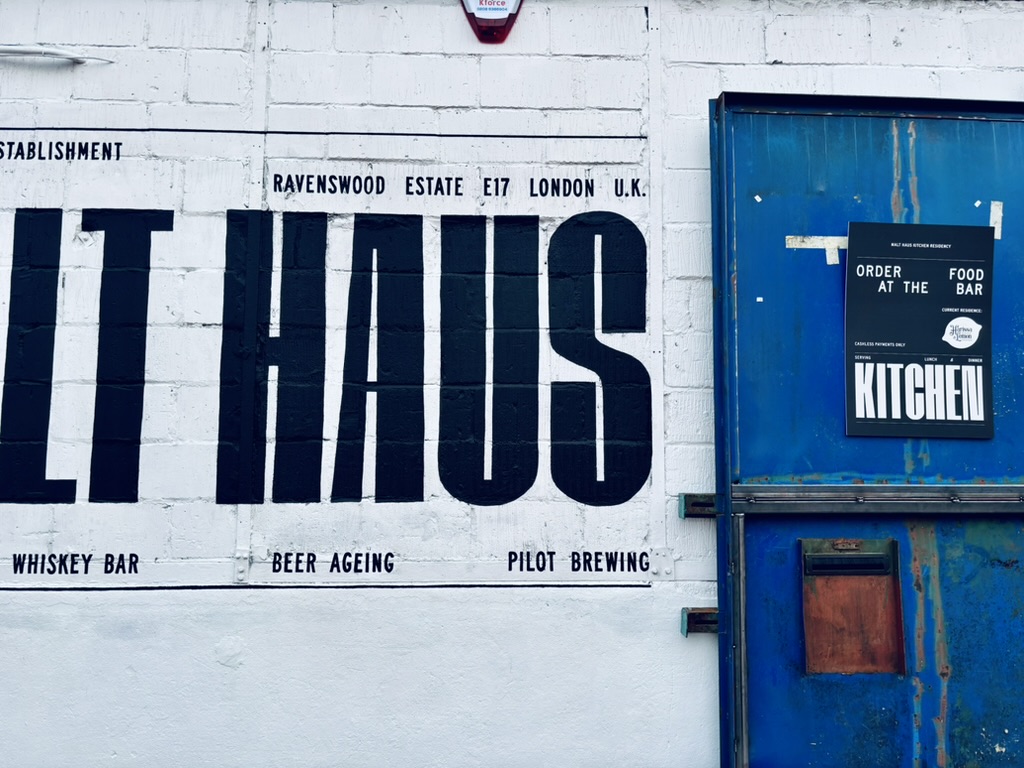
    Front house of the Malt House brewery in Walthamstow.

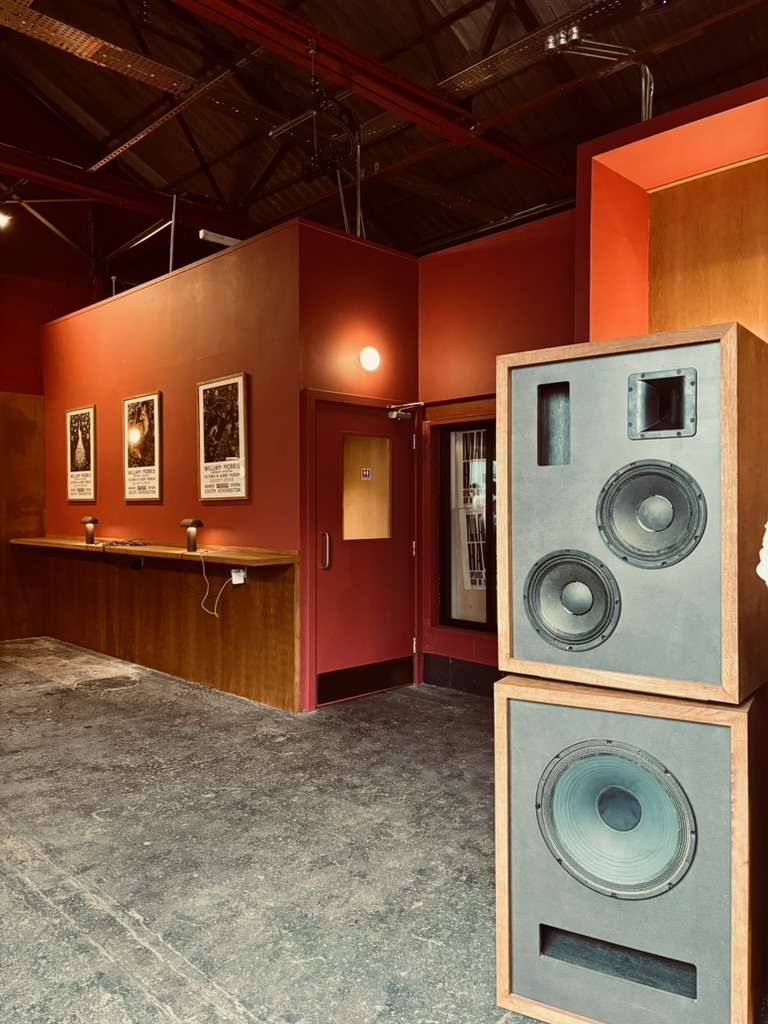
    The chosen destination was a new venue, social hub and community space, near the local treasure of the E17 area, God’s Own Junkyard. Bursting with good vibes and chatting groups of East Londoners downing malt-based drinks and spicy margaritas on tap, The Malt Haus (@themalthaus) stands out for its 60s-70s design style, inspired by listening bars and cocktail lounges from that era.

    Image of the interior of The Mal Haus brewery. Large speakers and William Morris posters on the wall.

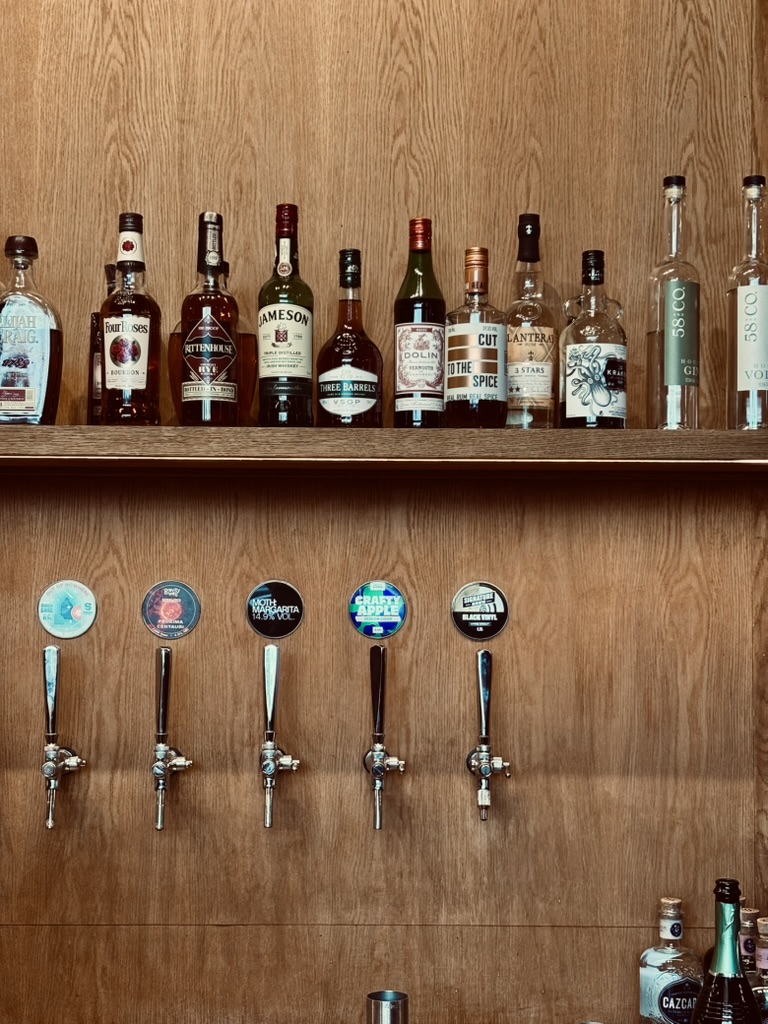
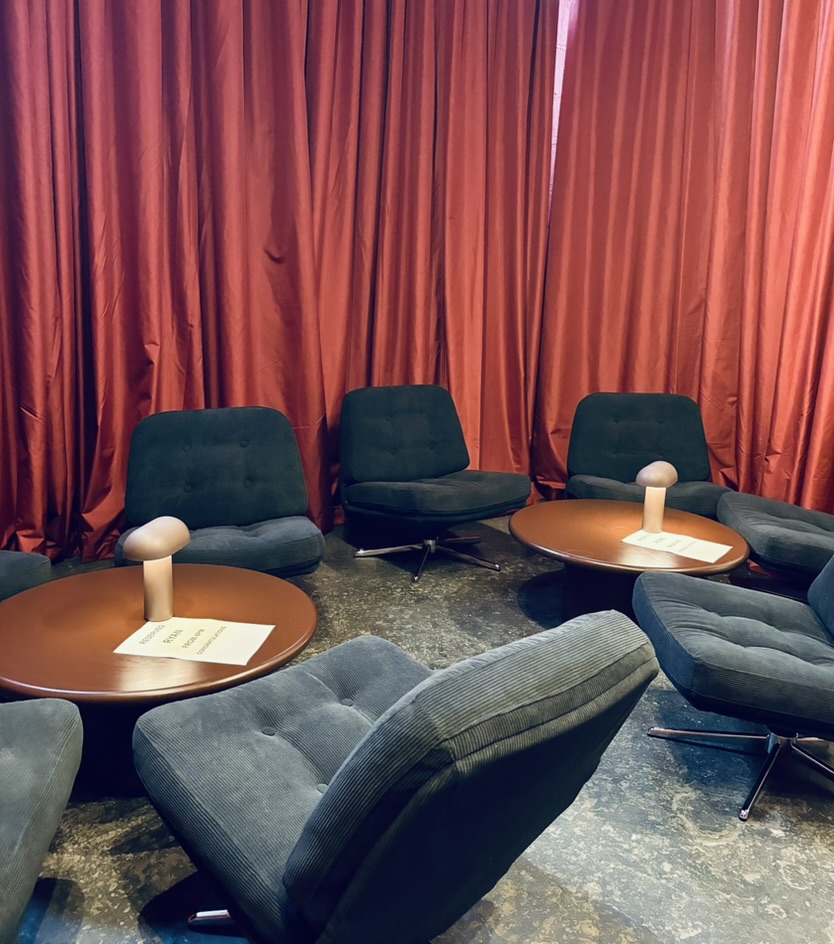
    This welcoming spot from the Pillars Brewery team is set aglow with soft, dimmed lighting and framed by large wooden bookshelf speakers that frame the bar. Cosy, retro low-slung chairs invite you to sink in, while William Morris posters — a nod to the iconic Walthamstowian designer — keep the local spirit alive. A compact bar showcases a beautiful selection of whiskey bottles, ready to be poured by the friendly staff. There’s also a resident kitchen, which yesterday was manned by the Moroccan street food team from Harissa and Lemon (@harissanandlemon).

    After enjoying a refreshingly delicious drink and winning a couple of rounds at the most addictive card game right now (Monopoly Deal) in their Biergarten-style tables, it was time to head back home. However, I will be looking forward to my next visit. A party in The Malt Haus’s 70s lounge wrapped in thick crimson curtains? Most likely. Can’t wait.

  • Abstract Art Echoes in “The White Lotus” Finale

    The White Lotus season 3 has got us theorising, speculating, and obsessing over eight episodes until its grand finale aired Sunday night, which has left some confused and some devastated. But beyond the characters, the plotlines, and the sheer luxury of it all, some scenes from this closing episode made me think of a few artworks, as refreshing as a cool glass of pina colada — minus the pong-pong fruit.

    From Lee Krasner to Joan Mitchell, The White Lotus season 3 finale finds its emotional and visual echo in paintings by 20th-century female abstract artists. A bold crossover of pop culture and art history, from Thailand through the canvas to our screens.

    The following article contains spoilers for The White Lotus season 3

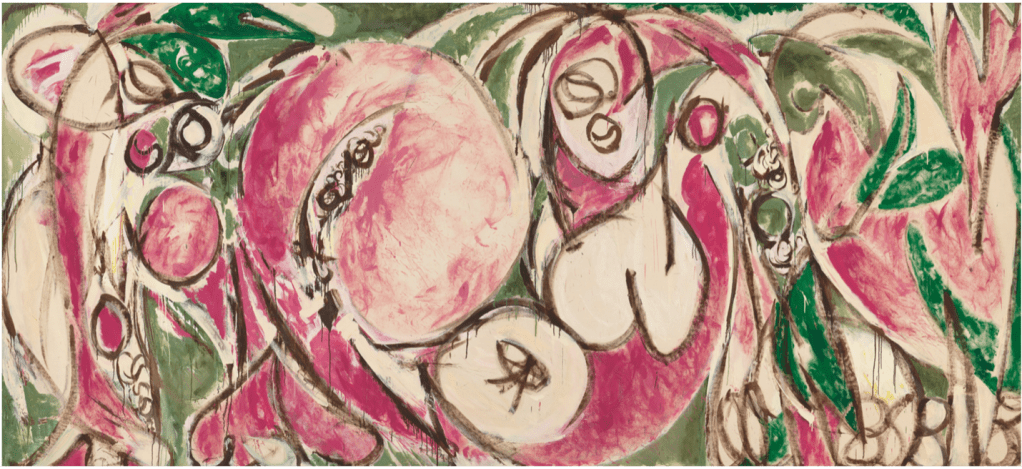
    1. Lee Krasner – The Seasons (1957)

    Image of the artwork The Seasons (1957) by Lee Krasner.
    The Seasons (1957) by Lee Krasner

    In her fantastic book The Story of Art Without Men, Katy Hessel opens her chapter on Abstract Expressionism with a quote by Lee Krasner: “Painting is not separate from life. It is one. It is like asking – do you want to live? My answer is yes.”  Interesting that the painting of an artist so full of life would come to mind precisely in a scene where the question “Do you want to live?” doesn’t have such a clear answer as in Krasner’s case.

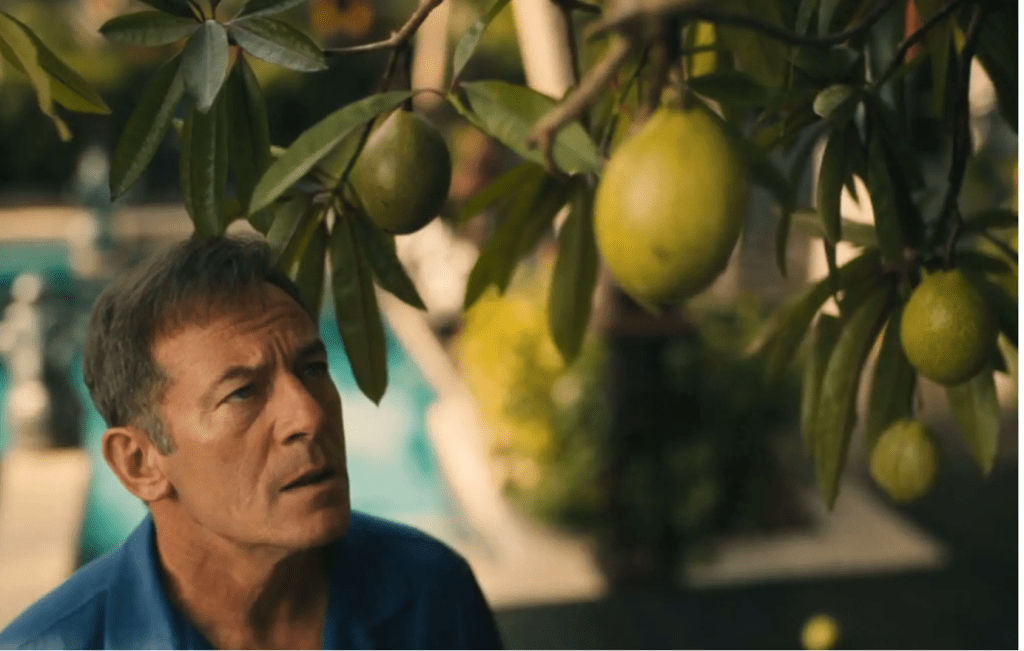
    After a week of pure despair, Timothy Ratliff resources to picking some fruits from the pong-pong tree to extract the fatal seeds, blend them and mix them in the classic holiday beverage – pina colada – to poison his family and put an end to their (rather his) suffering. The Seasons (1957) by Krasner is a vibrant, sprawling abstract work that explores transformation and rebirth, in a depiction of nature and fruits in a colour palette of fuchsia, green, cream, and brown. Although in the HBO’s series scene the predominant hues are warm greens, limes and blues, I could not help but finding a distinctive similarity: a fresh and attractive image of a fruit with a deep hidden meaning. Indeed, the transformation of the Ratliff family after their “almost” spiritual retreat will be as throbbing as the energy of Krasner’s work.

    Image of Tim Ratliff (Jason Isaacs) prepares to pick some of the poisonous fruits from the pong-pong fruit in his private villa at The White Lotus resort. Photo by HBO.
    Tim Ratliff (Jason Isaacs) prepares to pick some of the poisonous fruits from the pong-pong fruit in his private villa at The White Lotus resort. Photo by HBO.

    2. Helen Frankenthaler – Open Wall (1953)

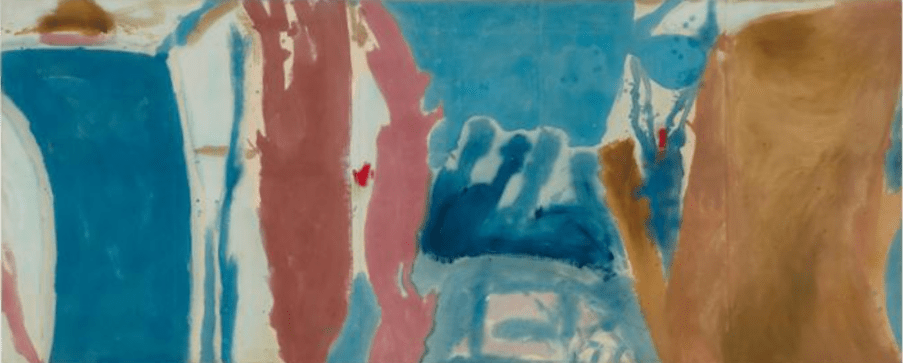
    Image of the artwork Open Wall (1953) by Helen Frankenthaler.
    Open Wall (1953) by Helen Frankenthaler

    Pinks, blues, browns and creams. Warm and cold. Opposite places. An abstraction that looks serene on the surface — but its fluid, bleeding forms suggest inner instability. The Ratliff siblings have a transformative experience over the course of one week at The White Lotus, turning their perspectives and most immediate desires upside down.

    The work in Open Wall (1953) by Abstract Expressionism and Colour Field artist Helen Frankenthaler captures a balance of control and improvisation, or as she puts it, “the interaction of spaces and the juxtaposition of forms”, which resonates with this last image of the Ratliff trio. Reflection, feelings and self-discovery surround the characters before life as they know it is doomed to change forever.

    Lochlan (Sam Nivola), Piper (Sarah Catherine Hook) and Saxon (Patrick Schwarzenegger) set off in the boat after their life-changing stay at The White Lotus. Photo by HBO.
    Lochlan (Sam Nivola), Piper (Sarah Catherine Hook) and Saxon (Patrick Schwarzenegger) set off in the boat after their life-changing stay at The White Lotus. Photo by HBO.

    3. Joan Mitchell – No Birds (1987–88)

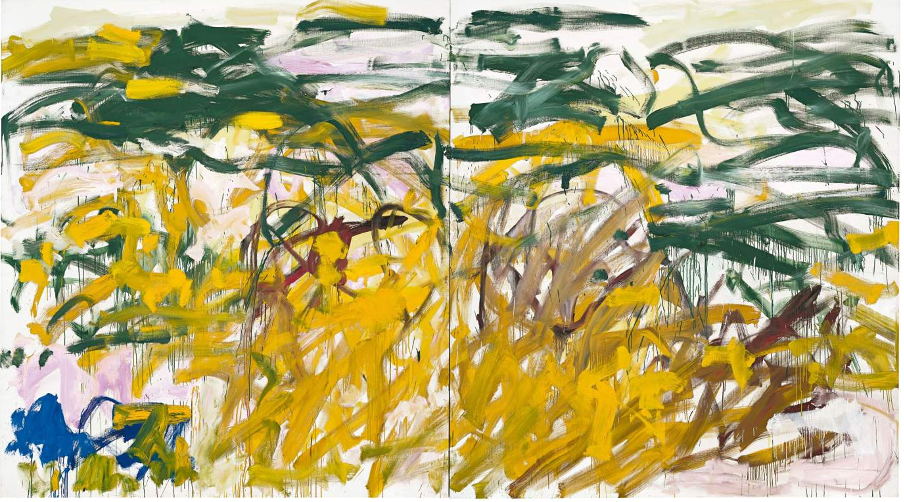
    Image of the abstract expressionsit artwork No Birds (1987-88) by Joan Mitchell.
    No Birds (1987-88) by Joan Mitchell
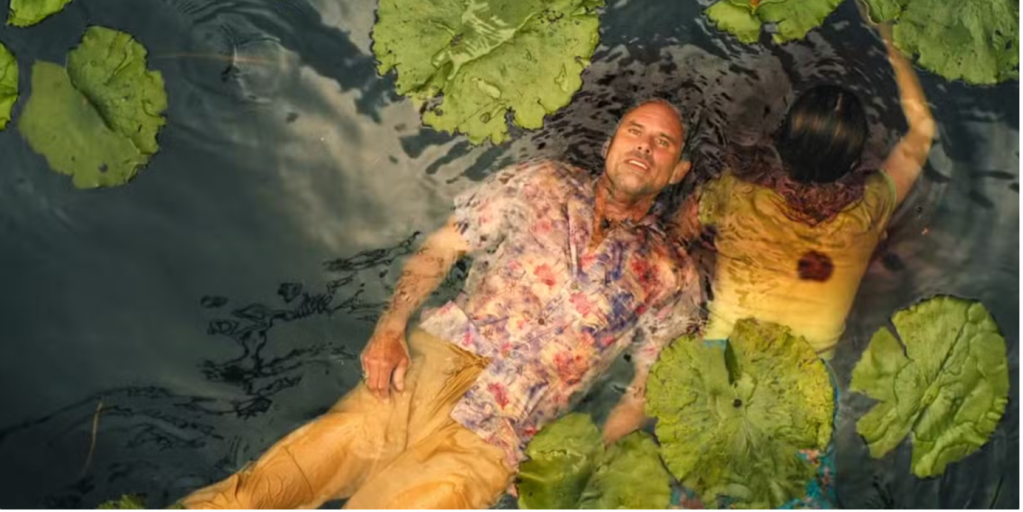
    Image of Rick (Walton Goggings) and Chelsea’s (Aimee Lou Wood) tragic death scene in The White Lotus. Photo by HBO.
    Rick (Walton Goggings) and Chelsea’s (Aimee Lou Wood) tragic death scene in The White Lotus. Photo by HBO.

    The powerful scene of Rick and Chelsea floating lifeless in the water, surrounded by water lilies, is as tragic as it is artistic. It seems to draw inspiration from the famous Pre-Raphaelite work by Sir John Everett Mallais Ophelia (1851-52) —a comparison that has not gone unnoticed on the media, as pointed out by Sarah Cascone in Artnet and Amelia Marran-Baden on Instagram.

    However, this dramatic moment also made me think of yet another abstract artwork. No Birds (1987-88) is a monumental, emotional canvas by Joan Mitchell that exudes both mourning and release. A mix of colours and expressive, water-like strokes, full of beauty and tragedy, that mirrors perfectly this final scene of the couple on the water. The overall palette of Mitchell’s work matches the clothes, the water lilies and the blood hues mixing with the dark teal water in the tragic scene, while the colours of Rick’s floral shirt relate to the strokes on the bottom left-hand corner of the painting.  

    While the creator of The White Lotus, Mike White, has clearly referenced art history not only in this last one but also in previous seasons, I like seeing that we don’t have to travel too far back in time to find similarities between different forms of art. In this case, I have focused on Abstract Expressionism women artists. I can’t wait to find out what artistic references the fourth season of this beloved HBO show has in store next time.

  • Reflections of Movement

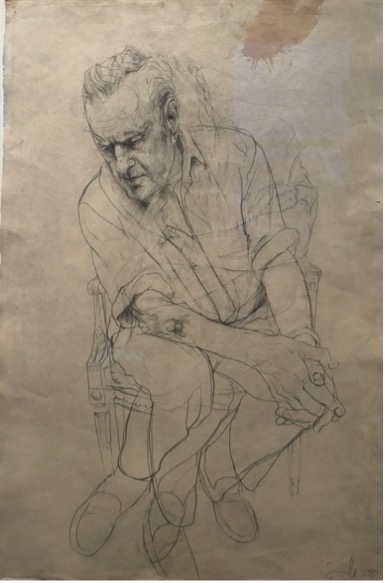
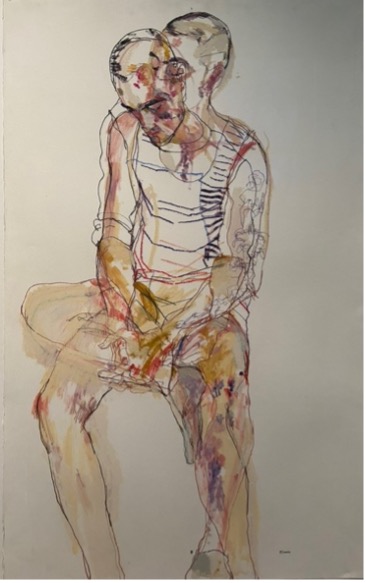
    In the “Lines of Feeling” section of the National Portrait Gallery in London, two drawings – full of movement, energy and feeling – stand out with dynamic lines and emotional impact.

    On one hand, “Study of John” (2010) by Jenny Saville. On the other, “Richard Nicoll” (2016) by Howard Tangye. Both artworks show a drawing of a seated man; one older, one younger, respectively. Both are the centre point of focus, with no additional images or colours on the background. Although drawn with quick, sketch-like lines, both pieces explore a level of emotion that reflects a fleeting moment.

    Saville, whose artistic practice has been described as “reinventing figure painting for contemporary art”, invokes her deep fascination for the extremities of anatomy, focusing with greater detail on the features of the face and the hands of the subject. Her study, painted with black charcoal over a stained-aged piece of parchment, shows an anatomically more detailed image of a man sitting on an armed chair, surrounded by additional lines that represent the remnants of what was his previous pose. A peaceful, yet dynamic expression of his movements during the sitting. Unlike Saville’s, the drawing of the figurative abstract artist Howard Tangye includes some layers of colour, while also exploring the essence of the subject through his movement – perhaps even his feelings – during the sitting. The portrait of the late Richard Nicoll presents him in two calm, meditative overlayered poses. With his eyes closed, his hands with fingers intertwined on his lap, one outline shows him with his legs separated and his head hanging down (as if asleep), while the other shows a more active posture, immersed in thought, with his right ankle over his left knee. The quiet yet colourful image – contrasting with Saville’s monochromatic work – almost seems to reflect with this movement of the lines the taciturn mood of the subject.

    Both artworks proclaim a level of emotion and engagement in the present moment that immerse the viewer, almost as if they were attending that precise sitting, seeing the subject move, act, and feel while the artists expertly outline the reflections of their movements on to the canvases.

  • The Art of Kissing by Women Artists

    Love has fascinated artists since the beginning of time, with painters, sculpturers and photographers exploring the art of kissing in many different forms and mediums.

    Beyond the famous depictions of this act of intimacy by male artists, like The Kiss by Gustav Klimt (1907-1908), The Lovers by René Magritte (1928) or The Kiss by Auguste Rodin (1882), the history of art tends to forget about the representation of love from a female perspective.

    Here are 5 artworks by women artists that reveal the kiss as different kinds of love.

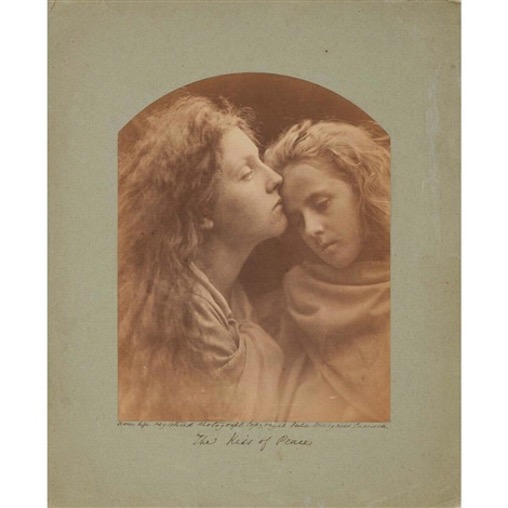
    1. “The Kiss of Peace” – Julia Margaret Cameron (1869)

    Picture of the artwork “The Kiss of Peace” by Julia Margaret Cameron (1869)
    Julia Margaret Cameron, The Kiss of Peace, 1869, via Artnet

    The Kiss of Peace captures an intimate moment between two young women – perhaps mother and daughter, sisters or friends. This dreamlike photograph by Julia Margaret Cameron, whose use of soft-focus was groundbreaking for 19th-century photography, depicts the kiss as an act of forgiveness or reconciliation, other expression of love. The use of light and blur enhances the ethereal, emotional depth of this moment of tenderness immortalised by the artist.

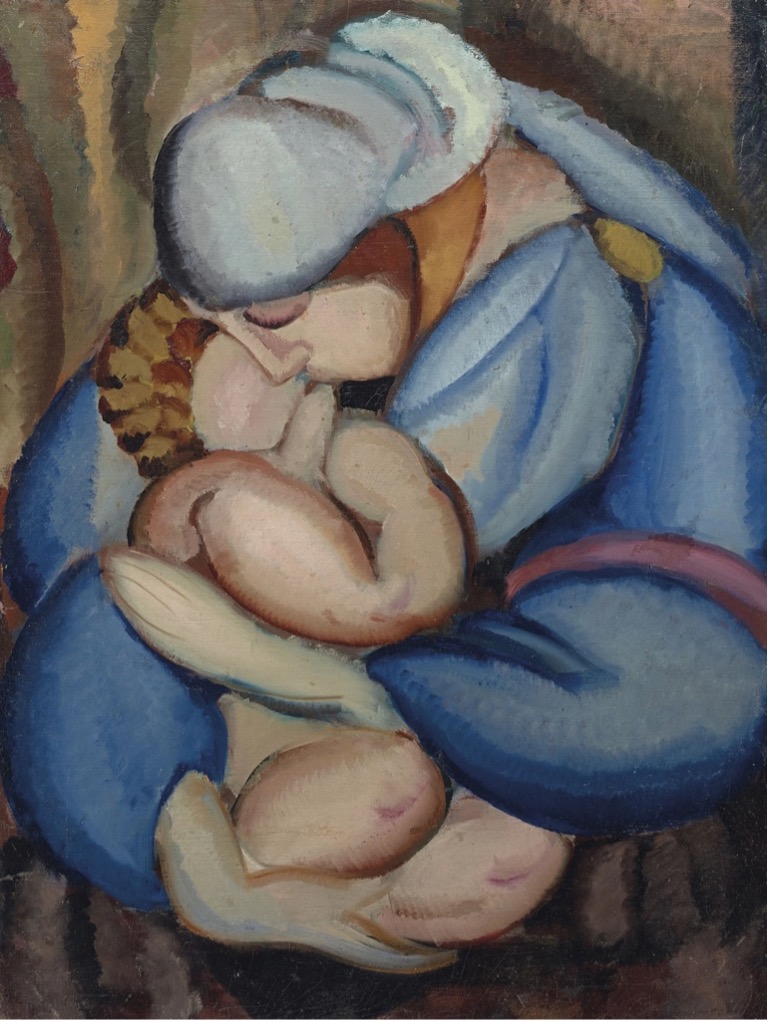
    2. “Mother and Child” – Tamara de Lempicka (ca. 1922)

    Picture of the artowrk “Mother and Child” by Tamara de Lempicka (ca. 1922)
    Tamara de Lempicka, Mother and Child, circa 1922, via Artnet

    The tender embrace of a mother kissing her baby takes centre stage in this painting by Tamara de Lempicka. Showcasing a blend of Cubist influences and soft and sculptural forms, the 20th-century artist celebrates the purest form of love: mother’s love. This painting presents a modern, secular interpretation of motherhood, emphasizing elegance and contemporary femininity. “Mother and Child” embodies Lempicka’s signature glossy, stylised approach, merging modern life with classical beauty.

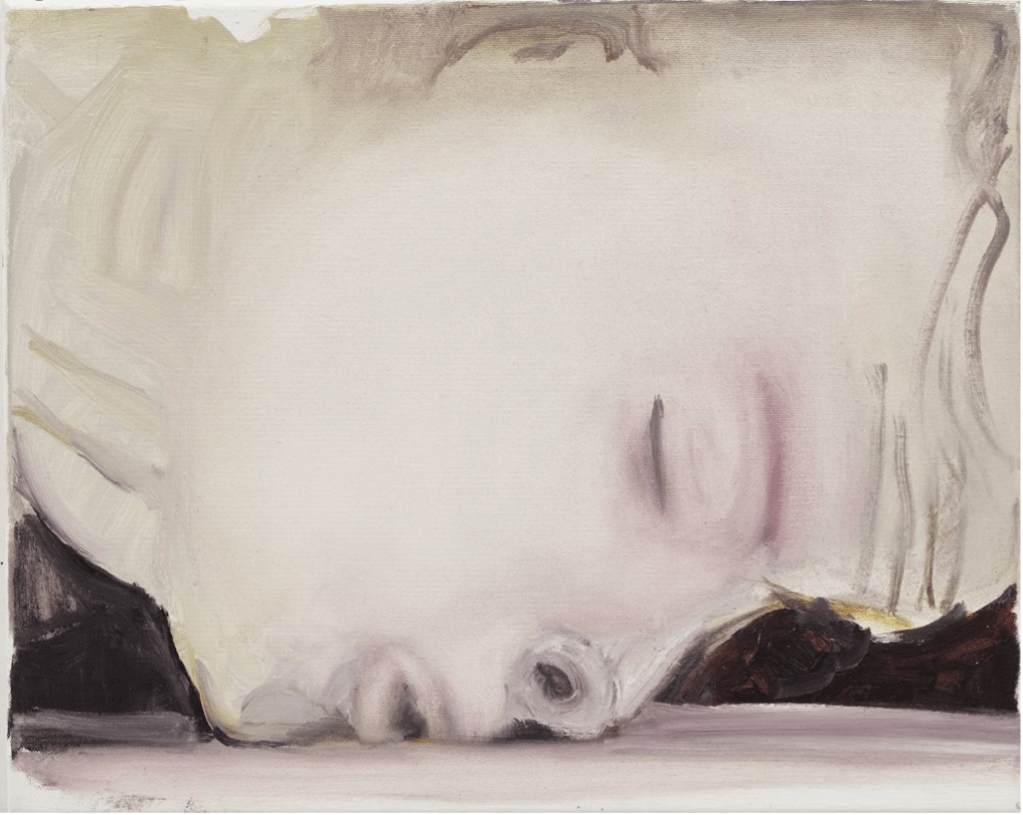
    3. “The Kiss” – Marlene Dumas (2003)

    Picture of the artwork “The Kiss” by Marlene Dumas (2003).
    Marlene Dumas, The Kiss, 2003, via Artsy

    Love and pain are inextricably linked. And the depiction of a kiss in this artwork by Marlene Dumas could be interpreted as both. The image shows the profile of a person facing down, with their lips touching a surface at the bottom. Their eyes are closed. Their lips and nose slightly pressed. The surface at the bottom is not clear. It could be the body of another person, a plain inanimate object or even the back of the arm of the person in the image, who is kissing their own body. The emotion is ambiguous, portraying as much passion and devotion as pain or pressure, as remarked by the artist herself: “No painting can exist […] without the pleasure of what it could mean and the pain of what it’s not.” The image leaves a strong remark and as sense of uncertainty about the concept of love.

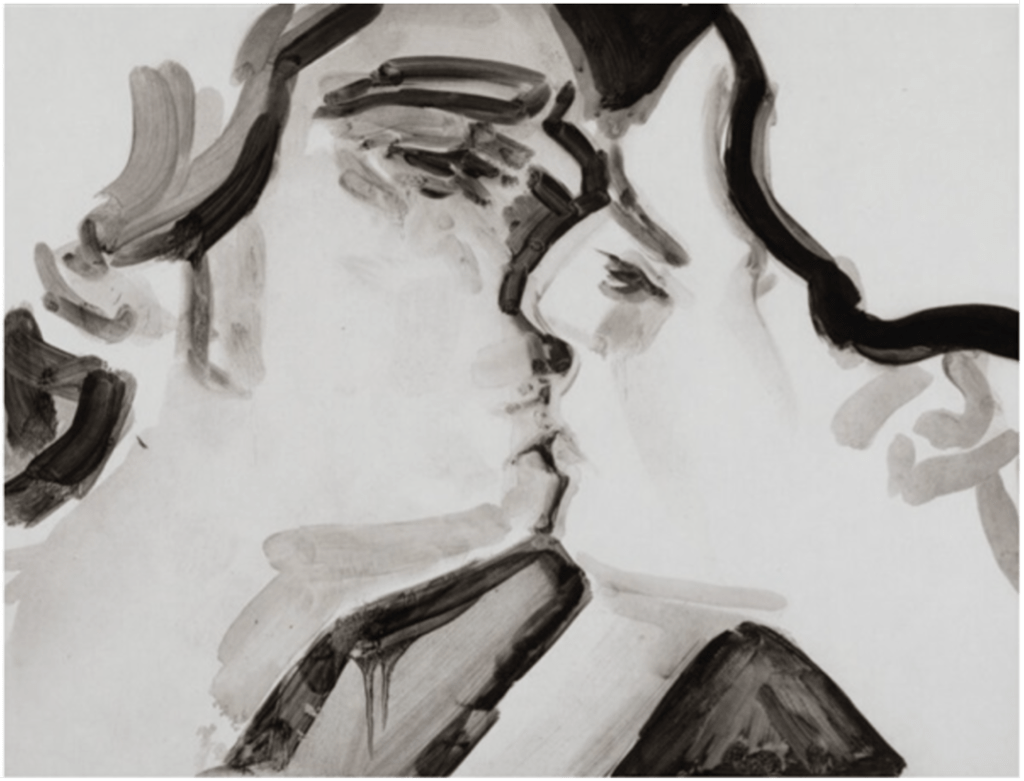
    4. “Elizabeth What Wondrous Things…” – Elizabeth Pyton (2012-2013)

    Picture of the artwork “Elizabeth What Wondrous Things...” by Elizabeth Pyton (2012-2013)
    Elizabeth Pyton, Elizabeth What Wondrous Things…, 2012-2013, via Artnet

    Passion, fascination, intimacy. All these are common aspects in the work of Elizabeth Peyton, who focuses her paintings primarily on the feelings. The strong, simple brushstrokes, and black and white colour palette set the scene with as much tenderness as dynamism. “A record of two people being in one room together at one time.” The two protagonists share a moment as deeply personal as evocative of a universal experience. A quick everyday kiss, a cautious first kiss, a goodbye kiss, a shy kiss, a passionate kiss. The interpretation is open to seduce the viewer. 

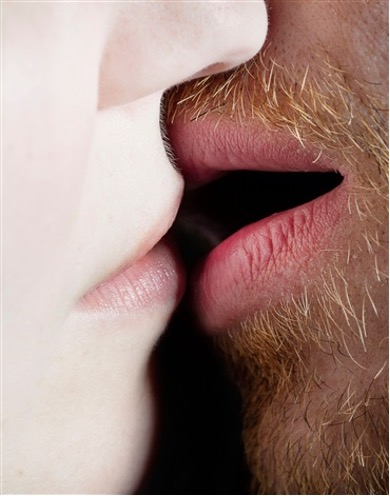
    5. “Kiss” – Elinor Carucci (2017)

    Picture of the artwork “Kiss” by Elinor Carucci (2017).
    Elinor Carucci, Kiss, 2017, via Artsy

    Dramatic lighting and a careful composition define this close-up of a kiss by Elinor Carucci. With his mouth partially open, a man approaches the lips of a woman. Her lips remain close. Her expression unclear. Are they both about to abandon themselves to a passionate kiss? Will she refuse his intentions to kiss her? Will she give in and embrace his intentions? A depiction of an “almost kiss”, which can be read as much as a manifesto of love and passion, as a gesture of refusal.